Several researchers have done brilliant work unfortunately on Sphagnum species that aren't fuscum; that release CO2 upon decay. Other Sphagnum species might be useful to fuscum. If they are acidic, competing vegetation is killed off; minerotrophic fen becomes an ombotrophic bog. They may moderate the water table to fuscum optimal. For instance, the only Sphagnum species that will grow over a pond is S.Riparian. S.Riparian should speed up the time it takes for a pond shore to be a suitable S.fuscum afforestation site. Thirsty coniferous trees may help too in adding soil acidity. S.fuscum is in direct competition in some areas with grasses and decidious trees. The competition aerates the soil, draining it. Cottongrass gives shelter and moisture to S.fuscum clippings and spores.
For a few years, tiny S.fuscum prefers a higher water table to what mature peat moss is optimized for. Mature S.fuscum prefers a lower water table as it competes better using superior water storage morphology to other species.
Plant species may also be useful for afforesting S.fuscum in that peat accumulates faster than 1mm/yr for some other parent species. If this peat is useful to S.fuscum transplanted Acrotelm, the quickest cheapest way of succeeding rock may be to 1st seed a fast growing fen seed mix and years later introducing S.fuscum. There is a need for more snow/rain gauges up north.
Researchers often publish the NPP of their Sphagnum fuscum research. This is carbon sequestered without mentioning carbon released. The net is NEP. NPP is useless.
Smaller Acrotelm sizes need more moisture; two optimal transplant sizes/methodologies will emerge. Larger chunks survive winter better. Here transport costs rule. Afforestation would take place near existing bogs and the procedure would be much like existing transplant research:
http://www.gret-perg.ulaval.ca/uploads/tx_centrerecherche/Cagampan_etal_HydrolProc2008.pdf
...except the new peat bogs to be grown would be an array of site types beyond past vacuum harvested bogs. Clippings and spores (research in infancy) are other potential afforesting materials. These may be sustainably harvested from existing bogs, or farmed/greenhoused. Small transport costs but decreased survivability of transplants. Probably spores or clippings would survive on prospering transplanted larger chunks.
The carbon value of peat moss isn't great. Historically NEP in N.Alberta or S.NWT was as high as 70 grams C/m^2/yr, where it is now maybe 3g/C/m^2/yr. Research suggests 10g/C/m^2/yr is average. 28g/C/m^2/yr is TKG target assuming optimized water table. S.fuscum only grows horizontally at 1.5cm/yr. If strips are harvested sustainably out of existing bogs and are to recover sustainably in 10 yrs, 30cm strips would be optimal width. Because Acrotelm 10cm deep is viable, a rototiller that can shave off thin top layers a few cms thick would be a great invention. Any improvement over a pitchfork is good.
Monday
Bomber boy
Bomber boy
Get your uniform on, you got ‘em lined up waitin’ for you
Bomber boy
You got ‘em standing’ in their seats, don’t hang ‘em up
For $8,000 you played like a woman last night
For $8,000 I don't think it’ll work out right
I don't think it’ll work out
You never know how you’ll ride it
Don't think it’ll work out
Bomber boy
You’ve been down for awhile with a tens of thousands dollar smile
Bomber boy
You got roared reviews and you’re front page news
For $3,500 you can play like your sister 2012
For $3,500 I don't think it’ll work out right
I don't think it’ll work out
You never know how you’ll ride it
Don't think it’ll work out
So spin with the Bouno and laugh in his face as he cocks his bow
Steal from his mistress as she’s makin’ love to your Special Teams and be aware that there’s not many there
Who want to take time to scheme and play a dishonest game for the people no more
"Ladies and Gentlemen, a warm space age welcome if you will
for the most phenomenal group of the century, BUCKY AND THE BOMBERS"
Bomber boy
You’ve really had your fill and it’s all downhill
Bomber boy
You’ve got excuses to tell when you see your old friends
For $3,300 you can play like a woman 2013
For $3,300 I don't think it’ll work out right
I don't think it’ll work out
You never know how you’ll ride it
Don't think it’ll work out


Sunday
transplanted Acrotelm open question
Centuries old Sphagnum fuscum has amazing moisture regulatory mechanisms. S.fuscum transports moisture by wicking it up hollow microtubules. A question is to what degree this is impaired by removing the 10cm top layer (the top 10cm exhibit successful vegetative regrowth) and transplanting it upon another substrate? University of Quebec research has transplanted Acrotelm to a dessicated peat layer that was vacuum harvested years before. The diurnal cycle of moisture movement was somewhat impaired. This was attributed to "voids"; a topological configurational mismatch between the bottom of the Acrotelm and the top of the dried peat: http://www.gret-perg.ulaval.ca/uploads/tx_centrerecherche/Cagampan_etal_HydrolProc2008.pdf
A different and fine-grained explanation is S.fuscum water droplet transporting microtubules remain mostly intact and functional after years of decay and a little functional after decades or more of decay. Severing nerves would be the rough analogy to removing the Acrotelm. It is important to know whether moisture transport can be maintained efficiently with Acrotelm transplanted to a new substrate. If it can't be, transplanted substrates will have to be much thicker and the most efficient geometry may be World Trade Centres rather than a roll of sod or a cube. The above referenced research took place in a bog with 1200mm/yr precipitation, and the transplanted Acrotelm survived and grew on the vacuumed peat. The cheapie real estate is 600mm/yr of that or less...
The cheapie real estate is now boreal forests, rock, tundra, glaciers, shallow freshwater. For reference, S.fuscum grows horizontally 1.5cm/yr and vertically at 1-2cm/yr, before compression to 1mm/yr after about 30 years.
Hydraulic Conductivity material property estimate aren't of much use. Sand and acrotelm have apporximately the same hydraulic conductivity: 10^-4 m/s. Acrotelm can wick water from below more efficiently. It would be nice to have better near surface geological surveys to open up the field. S.fuscum minimizes the incidence and number of forest fires, and where dryer tundra is at fire risk, the S.fuscum carbon economics are very favourable. Over centuries S.fuscum builds up its own perched water table. The permafrost will be melted entirely in 100 years; needs our help if existing Arctic carbon is to remain sequestered.
Solar System targets

If a means to make cost-effective in situ rocket fuel is found, the cost of metals on Earth will go down and/or the supply will blast off. One shopping mall-sized iron asteroid would have more metals than has ever been mined. Also, Aliens represent a very double-edged encounter event. It might not be wise to plateau technologies anytime soon and attempt a steady-state society as our improving humanist society has been technically fragile since WWII.
The R+D spinoffs of planetary satellite Missions are nice. Some materials science and electronics innovations scale up to one day be a part of the general economy. Planetary Missions are getting cheap all the time but the science returns may encounter diminishing returns.
My preference is the search for active animal ecosystems at infinitesimal odds. The portion of NASA's $2B/yr (the rest of the world might have the same budget) planetary science budget devoted to the search for animal life is small; where the search is for life it has been for microbes and past life. The main reason for this is a heat source has been under-estimated until this past decade. Low grade heat sources include exothermic chemical reactions, the Sun, and radioactive decay. It turns out tidal heating, the motion of Ice Moons around at least Saturn and Jupiter, is enough to melt ice. There are a half-dozen or so Moons where this is expected to be true based on measures of wobbles and/or ions (salt water).
Teeny Enceladus appears to have active geysers. Cassini has been through the plumes but was not designed for anything but a rudimentary search for life molecules. Europa is currently the favoured of the Ice Moons. Not sure why; it takes about 6 years for ion engines to get to Jupiter and 9 years to get to Saturn. Four Ice Moons on Jupiter may comprise a better science payoff than Saturn's Titan and Enceladus. The other Jovian Ice Moons with potential liquid water have a crust above the water layer in addition to ice; there is only one Solar System body where it seems a tunnel through the Earth will be burned.
sphagnum fuscum is an emergent field

The top "living" layer of peat moss grows seamlessly on the "dead" peat. The top layer is called Acrotelm; is 10cm deep. It accumulates at around 1cm/yr and is subsequently compressed as it accumulates in the lower catotelm/peat layer at a rate of 1mm/yr. 15m deep peat is the S.fuscum limit. Other types of peat likely emit methane; other plant species should be researched here only as a succession target or as S.fuscum symbiotes and temporary pioneer species.
Acrotelm has been reintroduced upon dry harvested peatland with moderate success. There were noticable gaps caused by hysterisis. If this is the only issue, rolling reclaimed peatland might help at a cost.
No one has yet tried to introduce acrotelm from an intact S.fuscum peatland, and introduced it where no S.fuscum peatland exists. 1/3 of the existing Acrotelm can be safely harvested with regrowth in a few years in peat lands where rainfall is 1200mm/yr. Possible moisture holding substrates for reintroducing Acrotelm (chunks of 4000cm^3 will survive/grow better than 2000cm^3) upon include stand-alone or a combination of:
- Peat deposited by faster growing and decaying plant species.
- Loess or silt. Silt covering Acrotelm is not desired.
- Clay or clayey soil.
- Thin slivers of S.fuscum peat at potentially different stages of "decay", separated from a metres deep peat "deposit".
Saturday
why wheat
Food stores are useful to have for a variety of shocks and emergencies. Rice exhibits survival over a large temperature range. Oats are edible raw. Soy contains all essential Amino Acids. Other crops probably grow on marginal land. But it is wheat that is most storable under appropriate conditions: cool, dry, protected from insects, vermin, fungi, etc. Edible wheat has been recovered from the pyramids thousands of years old. Wheat presently costs 2% of crop cost, to store in modern silos. Mostly this is the cost of drying and refrigeration.
There are potential ways of decreasing this cost: Novel polymer bags, new silos and storage bins, GMO varieties, the presence of permafrost suggests refrigeration costs can be lowered. Other food crops might be engineered one day to bequeath the storability of wheat. Most of the oil in wheat is in the wheat germ, which is not stored in silos.

Spelt wheat. An uncommon variety, by virtue of its hard covering Spelt is particularly resilient.
There are potential ways of decreasing this cost: Novel polymer bags, new silos and storage bins, GMO varieties, the presence of permafrost suggests refrigeration costs can be lowered. Other food crops might be engineered one day to bequeath the storability of wheat. Most of the oil in wheat is in the wheat germ, which is not stored in silos.

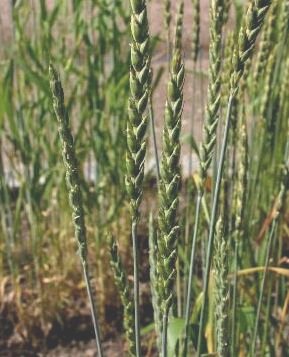
Spelt wheat. An uncommon variety, by virtue of its hard covering Spelt is particularly resilient.
Friday
measuring hockey tournament strength
Points awarded for large tourneys are 4 for 1st, 2 for 2nd, 1 for 3rd. Split the pt for 3rd tie if no bronze game.
Strength measures are tricky. For the Olympics after 1994 and for World Cups, the best players went. It is unreasonable to expect a (low paid) longer tourney or for players to play with NHL playoff levels of injury, so 100%. For annual WHCs, I'll say 40%. Except for the lockout year 2005, where Russia and the Czechs sent their best. That year is 80%.
Strength measures are tricky. For the Olympics after 1994 and for World Cups, the best players went. It is unreasonable to expect a (low paid) longer tourney or for players to play with NHL playoff levels of injury, so 100%. For annual WHCs, I'll say 40%. Except for the lockout year 2005, where Russia and the Czechs sent their best. That year is 80%.
weighting old hockey tourneys
The IIHF compiles an annual international hockey ranking:
http://www.iihf.com/home-of-hockey/championships/world-ranking/mens-world-ranking/2011-ranking.html
A problem with weighting each WHC equally with Olympics is in theory the best NHLers are still in the playoffs. Another problem is the rankings expire after only 4 years. Players peak at around 24, younger for FWs and older for keepers. So at 22 and for five years, I'll assign tourneys full weighting. Tourneys gradually decline in importance over time as previously peak players reach 27-30, and symmetrically ascending from 18-21 years of age. E.Lindros didn't have a problem at the 1991 Canada Cup, but many players aren't physically mature at 17; 18 yr olds in less physical Euro leagues should maybe be playing against 17 yr old WHLers. Very few 16 years can make a difference at a best-on-best tournament, as can very few 38 yr olds. 16 yr old players and 38 yr old players are weighted the same tourney value (5%), 17 yr olds and 34 yr olds are also weighted the same value (25%).
If your still with me (spread-sheet one day) for five years I'll assign a tournament a weighting of 1: a 22 year old is still prime at 26. A 6 yrs ago tournament drops in importance 10% to 0.9. Every year a tourney loses 10% of weighting until the tourney is 12 years old and weighted 0.3 or 30% as important as a tourney which was played1-5 years ago. Then losing 5% weighting a year until a 17 years ago tourney is only weighted 0.05 of a new one. In 2011, I'd count the 1996 World Cup but not the 1994 Olympics.
Younger players don't play at the same skill level (more intensity though), so I'll penalize youth players with a lesser tourney weighting: 21 year old players, 0.9. 20 yr olds, 0.8. 19 yr olds, 0.7. 18 yr olds, 0.6. 17 yr olds, 0.25. 16 yr olds, 0.05.
A further penalty is the best players are of all ages. The # of years from 16-38, is 23. At 16 yr olds and under the tourney is only getting 1/23rd of all the top players. At 17 and U 2/23. 18 and U 3/23....21 and U 6/23. Multiplying these fractions by the previous paragraph values yields (rounded to 0.1%) tourney weightings of: 21&U, 0.235. 20&U, 0.174. 19&U, 0.122. 18&U, 0.078. 17&U, 0.022. And 16&U tourneys 0.002 or 0.2% the value of World-Cups/Olympics.
The youth tourney results are valid for longer than adult tournaments as players are starting from younger than 22 yrs old. Tourney results will be included at full weighting an extra year for every year younger than 22 years old the eldest players are. 21&U tourney results will be ranked for 18 years. 16&U for 23 years, rendering hypothetical results from 1989 valid in 2011.
influenza epidemic civil defense
Scientists believe, it sounds fishy to me, that the lack of social distancing during World War One cramped infantry quarters, caused the flu to mutate to a more virulent form. If this is true keeping our distance from eachother during a future influenza pandemic should at least mildly cause it to mutate to a less virulent form "naturally", as the flu progresses through our global population. This is a second reason to maintain basic civil defense stockpiles in your pantries. The 1st is that you won't get sick in the first place if you don't have to get in line for groceries and water.


winnowing down KG portfolios
 |
| who has gas |
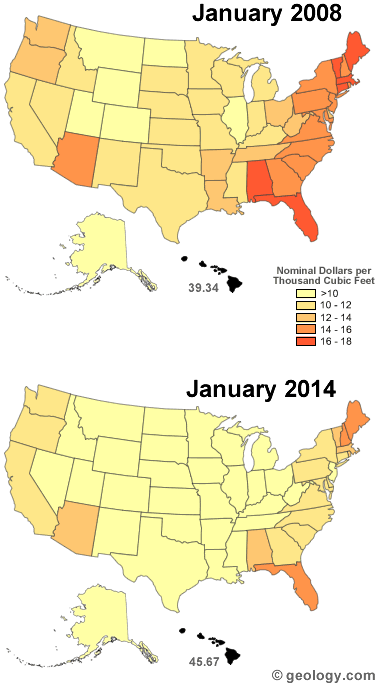
Natural gas is cheap as of late 2011. All that sindustry money pooling in AB may trickle down to their gas companies. TKG was impressed by the performance of MB/SK/ND during the recession. They have diversified economies and TKG has never followed Singapore, Australia or India investments. The other recession outperformers. Also like Ontario's renewable energy portfolio, their materials science clusters, and their immigration. Will consider their bonds, possibly Hydro, in addition to the central North American 3: the longer investors have to muse over the recession, the more they should gravitate towards the good kids of the recession. CAD at 95 cents USA, looks like a nice place to park money. Looking for a pure bee play. So is Breyer's.
TKG's second investment was in a store front flashing small cap company TKG was lucky to exit with minor loss. They had debt due and defaulted. No one from companies or in the financial community likes to talk about truths that may hurt a stock price, as a lower stock price could itself cause an even lower stock price. If a company's debt due dates aren't crystal clear, $15M due on Sept 30th 2014 or whatever, don't invest. TKG likes New Flyer, a transit bus manufacturer, as a biz. TKG can't understand their preferred share structures and will not invest.
investment benchmarks to outperform
The Keystone Garter (TKG) seeks to outperform common intelligent investment vehicles in Canada and the USA by 1% or 2% per year at least. A business cycle last around 8 years historically, so TKG will attempt to outperform most or all of these vehicles over a 9 yr period, accounting for taxes and currency exchange flux. Still working on the details; Canada gives TKG some exposure to the developing world but might be missing out on EU. The vehicles TKG will compete against while still sneaking SRIs into its portfolios, are:
- Third Avenue Value Fund. There are a few of these. TKG will pick one. Whitman's wiki CV impresses TKG. A value investor closer to Graham than Buffett.
- BRK.b. W.Buffett founded, a student of Benjamin Graham. Does not appreciate waiting for deep book value discounts to be realized in price, so prefers historic earnings growth and sound Executives. Likes brand power. Has demonstrated the ability to learn from mistakes and has incorporated some SRI into investment philosophy over time. Holds investments over the long-term to avoid realizing income taxes. This strategy results in progressively less wealth accrued from newer investments and returns decrease over time (from astronomical levels).
- 30 year USA Treasury Bonds. Even in a USA-inspired recession, USD assets are considered a flight to quality...
- GE. Diversified conglomerate without big defense exposure (USA in deficit). TKG isn ot a fan of nuclear power nor finance divisions under 2011 USA laws (Buffett liked the latter in 2009). Balanced out by medical equipment division and many energy efficient product lines. Might use Siemens ADR instead.
- Wilshire 5000 Index. Most of the USA stock market.
- Lundin or Hudbay. Two copper diversified miners without coal or tar exposure. Lundin was in danger of defaulting in 2008. Copper is used for water pipes, wind turbine components and is an antimicrobial coating. Cu appears cheap now.
Subscribe to:
Posts (Atom)